Introduction
The Andes between Argentina and Chile have more than 40 official crossings, and the paperwork is identical at all of them: get it right and the border is a 45-minute formality with spectacular scenery on both sides, get it wrong and you’re riding back down the mountain to the nearest town with a notary. Most horror stories at Paso Los Libertadores or Cardenal Samoré trace back to one missing piece of paper, usually one the rider didn’t know existed.
This guide covers the complete Argentina-Chile motorcycle documentation picture for 2026: the personal and bike documents you must carry, the insurance that actually counts at the gate, the step-by-step sequence on each side, the inspection that confiscates more food than contraband, and the mistakes that get riders turned around. We cross these borders all season with groups, so this is the version of the process we actually ride, not the version in a forum thread from 2019.
The documents you must have
Personal documents
The personal side is short. You need a passport valid well beyond your trip dates (Argentines and Chileans can cross with their national ID; everyone else needs the passport), and the immigration stamp or digital entry record from the country you’re leaving. Citizens of the US, Canada, the UK, the EU, Australia, and New Zealand need no visa for either country as tourists in 2026. Chile issues a tourist entry document at the border (the PDI slip, now digital at most crossings); treat it like a second passport, because hotels ask for it and you surrender it on exit.
Carry your home driver’s license plus an International Driving Permit. Both countries broadly honor foreign licenses for tourists, but Chilean carabineros at checkpoints respond much better to an IDP paired with the license, and rental contracts on both sides of the Andes commonly require it. Keep digital copies of everything in a phone folder, and keep the paper originals on your body, not in a pannier; if the bike and you separate, the documents should be with you.
Motorcycle paperwork, by scenario
The bike’s paperwork depends entirely on whose bike it is. On your own foreign-plated bike, you cross with the original title, the registration, your passport, and the Temporary Vehicle Import Permit (TVIP) of the country you’re leaving. Exiting Argentina closes your Argentine TVIP at the aduana window; entering Chile opens a Chilean temporary admission for the bike. The loop works in reverse on the way back, and a fresh Argentine TVIP is issued when you re-enter. This reset is routine; thousands of riders do it every season.
On an Argentine-plated bike (your own or a rental), the rules are specific and non-negotiable. You need the cédula (the vehicle’s registration card), and if the bike is not registered in your name, a notarized authorization to take the vehicle out of the country (the rental company provides this as part of any legitimate cross-border package). At the border you complete the form OM-2261, “Salida y Admisión Temporal de Vehículos”, the bilateral Argentina-Chile vehicle form, in original and duplicate. Legitimate rental operations prepare the OM-2261 details and the notarized permission before you leave; if a rental company shrugs at the question, rent somewhere else.
On a Chilean-plated rental, the mirror rules apply: the padrón (Chilean registration), a notarized salida del vehículo authorization from the owner, and the Chilean customs form on exit. In every scenario, the name on the authorization must match the passport you present, character for character. Border officers compare them, and a mismatch (a missing middle name is the classic) is grounds for refusal.
Insurance that actually counts
Neither your home policy nor a standard Argentine policy covers you across the border by default. You need liability insurance that explicitly lists the country you’re entering: for Argentine bikes, the international coverage certificate (the Mercosur-style carta with Chile named on it); for foreign bikes, a regional third-party policy purchased for South America. Officers do ask for it, especially on the Chilean side, and carabineros can ask again at any checkpoint inland.
The second layer is personal: travel medical insurance with motorcycling above 125 cc covered, valid in both countries. Chilean private healthcare is excellent and expensive; Argentine public hospitals will treat you but a serious incident becomes a logistics problem fast. Print nothing, but have the insurer’s assistance number saved as a contact and the certificate PDF in the phone folder. Our guide to planning a motorcycle trip to Argentina covers the insurance layers in more depth.
The recommended extras
Beyond the mandatory Argentina-Chile motorcycle documentation, a few extras turn problems into non-events. Carry two paper photocopies of everything: passport photo page, license, cédula or title, insurance certificate, and the notarized authorization. Officers occasionally keep a copy, a wet day can destroy an original, and a photocopy handed to a carabinero at an inland checkpoint keeps your original in your jacket. Add two spare passport photos and a copy of the motorcycle paperwork stored in a different bag than the originals.
The second extra is a border folder in the tank bag: a pen (the forms still exist on paper at the smaller posts), small cash in both currencies for the unplanned notary or insurance purchase, and the rental company’s emergency number saved as a contact. None of it weighs anything, and every item on the list exists because we’ve watched a rider need it at a border crossing with no town within 100 km (62 mi).
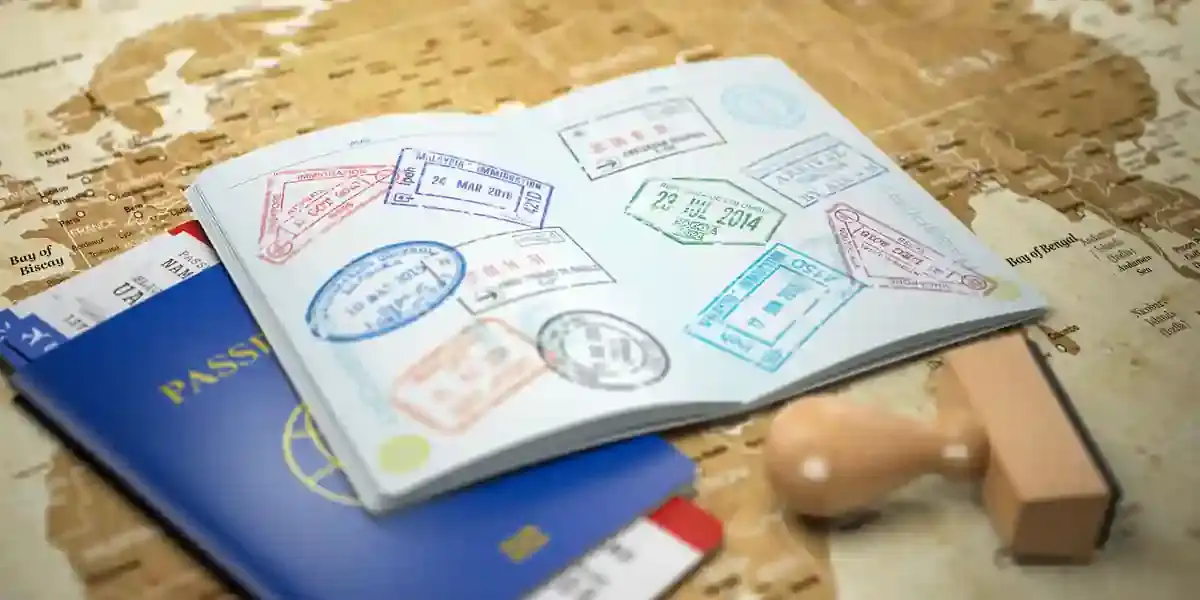 The border rewards riders whose documents folder is boring: complete, current, and copied.
At the Argentine border: step by step
The window sequence
Argentine border posts run a fixed sequence, and the order is migraciones first, aduana second. At migraciones you get the exit stamp (or digital exit record) for yourself. At aduana you close the bike’s situation: the TVIP is cancelled if you’re on a foreign bike, or the OM-2261 is processed if the bike is Argentine. Hand the officer the cédula or title, the passport, and the authorization if you’re not the owner, and keep the stamped duplicate they return; Chile will ask for it 200 meters later.
Some crossings run integrated single-building controls where Argentine and Chilean officers sit in adjacent booths (Cardenal Samoré processes both countries on the Chilean side in one stop in high season; Los Libertadores uses the integrated complex at Los Horcones). The sequence is the same, just compressed. Follow the painted lanes for vehicles, park where the officers point, and bring every document inside; nobody processes paperwork at the bike.
Timing and the queue reality
Plan the crossing as a half-day, not an errand. The process itself is 30 to 60 minutes when the post is quiet, but Los Libertadores in January, a Friday afternoon at Samoré, or a post-storm reopening can stretch it to three or four hours of queueing, almost all of it for cars and buses ahead of you. Motorcycles can usually filter to the front of the vehicle line in practice, but the document windows are first-come. Cross early in the morning, never in the last hour before the post closes, and check the pass status the night before; high passes close for snow even in shoulder season. Our Argentina vs Chile Andes climate guide covers how the seasons treat each side of the cordillera.
At the Chilean border: step by step
PDI, aduana, and the vehicle
The Chilean sequence mirrors the Argentine one: PDI (immigration) first, aduana for the bike second. PDI issues your tourist entry; aduana processes the bike’s temporary admission against the Argentine paperwork you just received. The officer wants the OM-2261 duplicate or your title and closed TVIP context, the insurance certificate naming Chile, and the notarized authorization if the bike isn’t yours. The bike’s admission paper stays with the bike documents until you exit Chile; losing it turns your exit into an afternoon of declarations.
SAG: the inspection that actually catches riders
The third Chilean station is the one riders underestimate. SAG (the agricultural service) inspects every vehicle entering Chile, and the rules are absolute: no fresh fruit or vegetables, no meat or cured sausages, no dairy, no honey, no seeds or nuts in the panniers. Every person entering signs a sworn declaration (the declaración jurada, now digital at most posts), and the offense is not carrying the apple, it’s failing to declare it. Declare everything edible and let the officer decide: a declared sandwich costs you the sandwich, an undeclared one costs a fine that starts in the hundreds of dollars and can reach four figures.
The practical rider’s rule is to empty the panniers of food the night before the crossing, eat the trail snacks on the Argentine side, and cross with sealed commercial products only if you must carry anything (sealed, factory-packaged goods are generally admissible, but declare them anyway). SAG officers see adventure bikes daily; the tank-bag apple and the saddlebag salami are the two items they find most, and X-ray machines at the larger posts find them reliably.
Riding back into Argentina, the same food rules apply in reverse: Argentina’s SENASA restricts fresh fruit, vegetables, and animal products entering from Chile, with the same declare-or-pay logic at the motorcycle border crossing. The clean habit that solves both directions is permanent: cross every Andean border with empty food bags, buy lunch on the other side, and the agricultural windows become a wave-through.
Common rejections and how to avoid them
The paperwork mismatches
Most refusals are name and ownership problems. The notarized authorization must match the passport exactly, the cédula must be the current one (not the expired card from the last ownership transfer), and a rental contract is not a substitute for the notarized salida authorization. The second cluster is insurance: a policy that covers “Mercosur” in marketing copy but doesn’t name Chile on the certificate fails at the window. Read the certificate, not the brochure.
The third is timing on permits. A TVIP that expires mid-trip is a trap: officers will not let a bike exit into a permit problem, and renewing from the border is not a thing. Check the TVIP date against your full route before you leave, including the return crossing, and remember that the permit belongs to the bike and rider together; a friend cannot ride your bike across for you.
When you do get turned around
It happens, and the fix is almost always in the nearest town: a notary in Mendoza, Bariloche, or San Martín de los Andes can produce the missing authorization in an hour, insurance with Chile named on it can be bought online and shown on the phone, and the OM-2261 is issued at the border itself. The expensive version of this story happens when riders attempt the crossing late in the day at a remote pass, get refused at 17:00, and ride the mountain back down in the dark. Cross early, at busy passes, with paperwork checked the night before, and a refusal becomes an annoying morning instead of a dangerous evening.
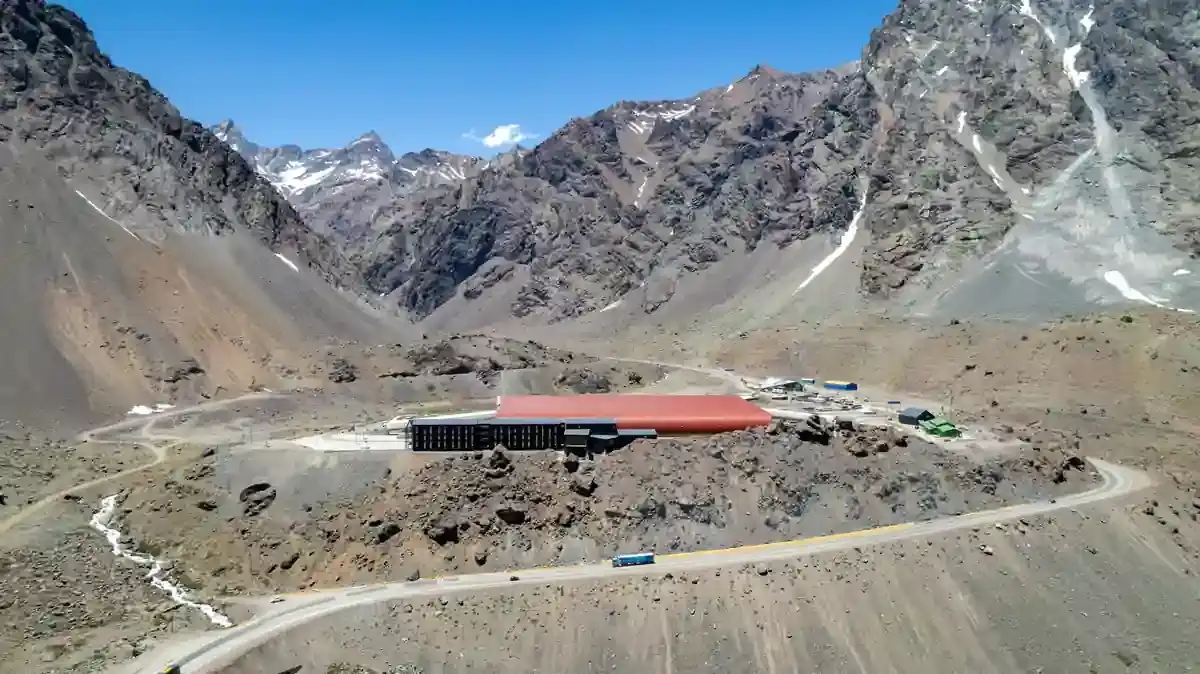 The control complex from above: migraciones, aduana, and the agricultural window, all under one long roof at 2,800 m (9,200 ft).
Timing, passes, and what changed for 2026
Choosing your crossing
Pass choice is a route decision more than a paperwork one, since documents are identical everywhere. Los Libertadores (Mendoza to Santiago) is the workhorse: high, busy, dramatic, and the most likely to close for weather, with the Cristo Redentor tunnel at the top.
Cardenal Samoré (Bariloche to Osorno) is the rider’s favorite: lower, greener, usually faster, and open more reliably year-round. South of those, the smaller Patagonian crossings (Futaleufú, Huemules, Integración Austral) are quiet and quick but keep shorter hours and thinner services; confirm hours before committing to a remote pass, because some close by early evening.
The 2026 picture
The good news is that 2026 is the easiest this border has been in years: both countries’ entry processes are digitized at the major posts, the Argentine TVIP rules were standardized in 2025, no visas are required for the usual visitor nationalities, and there are no special fees for crossing with a motorcycle beyond your insurance costs. Rules do drift, so check the official pages (the Chilean aduana vehicle travel page and the Argentine border recommendations for Chile) in the month you travel, and treat any blog older than 2025, including this one eventually, as a draft to verify.
Conclusion
The checklist in one pass
Run the Argentina-Chile motorcycle documentation checklist the week before you cross: passport and IDP on your body; cédula or title for the bike; notarized authorization if the bike isn’t yours, name matched to the passport; OM-2261 ready if the bike is Argentine; TVIP dates checked against the whole route if it’s foreign; insurance certificate with the destination country named; phone folder updated; panniers empty of food. Eight items, one evening, and the border becomes the easy part of the day.
The deeper point is that this border rewards preparation asymmetrically. Prepared riders clear both sides in under an hour at a quiet post and remember the crossing for the scenery at 3,200 m (10,500 ft). Unprepared riders remember the parking lot. Nothing about the process is hard; all of it is unforgiving of improvisation, and every piece of it can be solved from your kitchen table a month before the flight.
Crossing it with us
If you’d rather ride the pass than administer it, this is the part of the trip where a guided format earns its keep. On our Andes Crossing expedition and our Argentina-Chile motorcycle tours, we handle the OM-2261, the notarized authorizations, and the insurance for the whole group, and the crossing becomes a coffee stop with a view. Get in touch if you want to talk through which pass fits your route and your dates; we cross them all season and we’re happy to share what the border looks like the month you’re planning to ride it.