Introduction
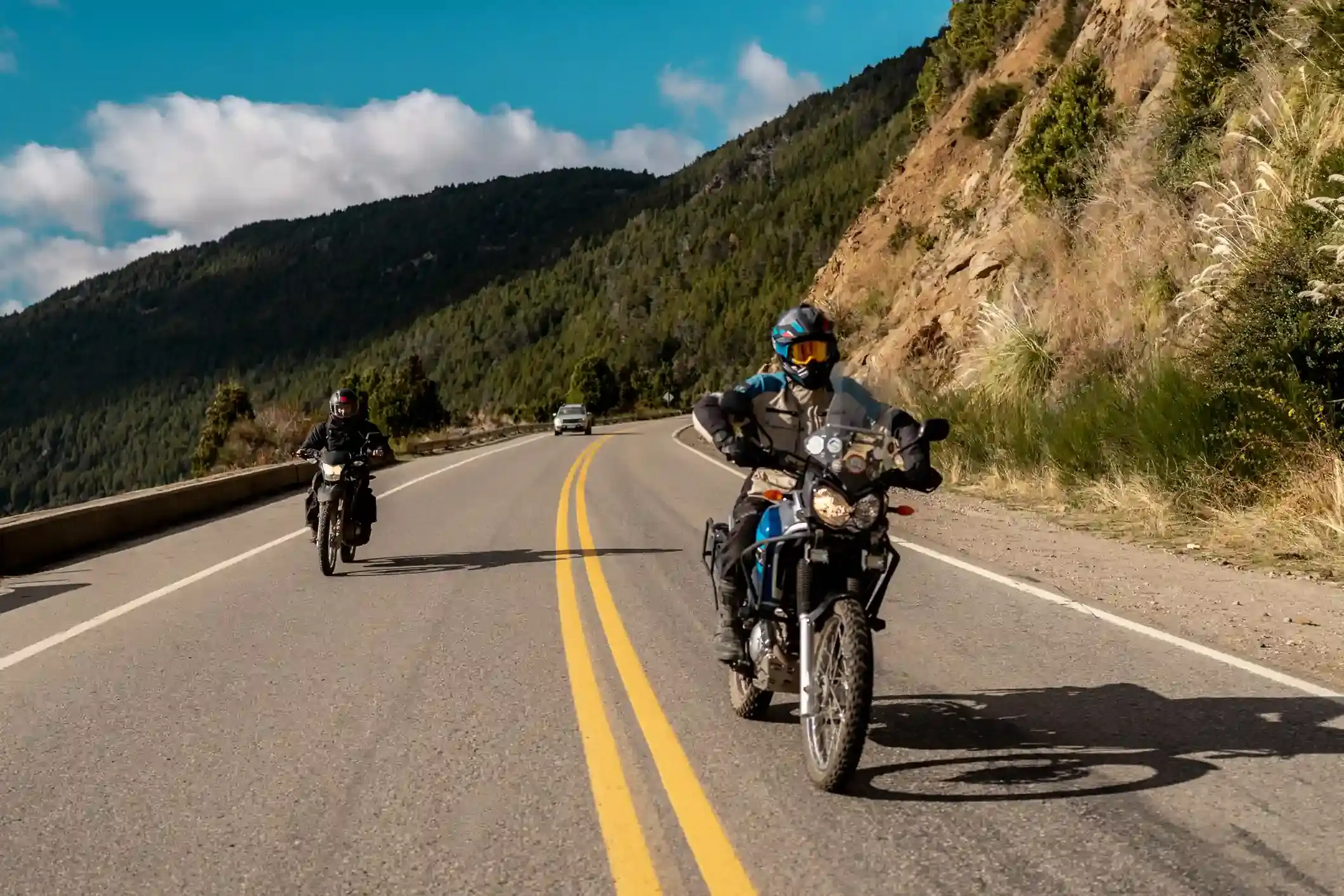
In early January, the wind on the southern stretch of Ruta 40 between Perito Moreno and El Calafate can push a fully loaded adventure bike sideways across half a lane, in broad daylight, on dry pavement. In late March, on the exact same road, you can stop for lunch outside, take off your riding jacket, and hear nothing but your bike cooling down. That gap, roughly three months apart, is why “when to go” is a bigger decision in Patagonia than in most long-distance riding destinations. The weather doesn’t just shift from warmer to cooler. It shifts from ferocious to calm, from crowded to empty, from long days to short ones, from fully open to partly closed.
This is a month-by-month breakdown of riding conditions across both the Argentine and Chilean sides of Patagonia, aimed at international riders planning from abroad. We walk through weather, road conditions, wind, daylight, tourist density, and lodging for every month, and flag what kind of trip works best in each window. If you’re choosing between flights for November, January, or March, you’ll leave with enough to pick with confidence. This is not a “best time to ride Patagonia” post that tells everyone to come in February. It depends on what you want out of the trip.
When is the best time to ride Patagonia?
The overall riding window
Patagonia sits between roughly 40°S and 55°S, so the climate runs on the opposite calendar from the Northern Hemisphere. Summer peaks in January. Winter peaks in July. The usable season for most international riders runs from late October to mid-April, with a reliable core from mid-November through March. Outside that window, you’re fighting closed passes, closed lodging, or weather that’s genuinely unsafe on exposed steppe.
The northern slice of Patagonia, around Bariloche (41°S) and San Martín de los Andes (40°S), has a slightly longer usable window. You can often ride these areas in October and the first half of April with careful planning. The south is tighter. El Chaltén and El Calafate, closer to 50°S, have a real season from late November to early April. Tierra del Fuego and Ushuaia, at 55°S, are tighter still, plan on mid-December through March for stable conditions.
Two forces compress the window further. The first is wind. Patagonia’s wind is not a legend, it’s a feature, and it peaks when the weather is warmest, November through February. The second is infrastructure. Many small towns along Ruta 40 south of Bariloche, and along the Carretera Austral, run as seasonal businesses and close for winter. Even if the weather cooperated in May, half your fuel stops and lodgings would be shut.
Argentine Patagonia vs Chilean Patagonia
The two sides share a border and a mountain range, but they ride very differently. The Argentine side is dry, open, high-steppe. Ruta 40 runs through grassland that gets less than 300 mm (12 in) of rain a year in the deep south. Roads are mostly paved, with some gravel stretches. The problem is not rain. The problem is wind and distance. Fuel gaps of 200 km (124 mi) are normal, and shelter from wind is rare.
The Chilean side is the opposite. The Carretera Austral runs through temperate rainforest, fjords, and glaciers. Rain is the constant variable, even in high summer. Roads are a mix of pavement and ripio (gravel), with long gravel sections south of Coyhaique that turn slick when wet. Ferries are part of the route, and they run on summer schedules that thin out fast once April arrives. For a trip covering both sides, the window tightens to where the two seasons overlap, roughly late November through March.
Core season: November through March
November and December
November is when the season wakes up. By the first week, most lodging in the Bariloche and San Martín de los Andes area is back open. High Andean passes, including Cardenal Samoré, are clear of snow and open full-time. Temperatures in the north of Patagonia climb from about 10°C (50°F) at the start of the month to 18°C (64°F) by the end. In the south, around El Calafate and El Chaltén, it’s still cold (highs near 12°C / 54°F, nights near freezing), and the Perito Moreno area can see late snow into mid-month.
December is when it all comes together. By December 15, you can run the full Patagonian loop (Ruta 40 south, Carretera Austral north) in reasonable conditions. Temperatures in Bariloche sit at 18 to 25°C (64 to 77°F). Further south, 15 to 20°C (59 to 68°F). Daylight around the solstice (December 21) is roughly 15 hours in Bariloche and over 16 hours in Ushuaia, so riding time is not a constraint. Wind is present but still building toward its peak.
Tourist density through most of November is low. December is quieter than January and February, but shifts fast in the last ten days as the Argentine summer break starts. If you want warm weather, long days, and smaller crowds, the window from November 20 to December 18 is one of the best on the calendar. Lodging is bookable a few weeks out in most places, except for popular spots like Torres del Paine and El Chaltén, which need advance reservations even in early December.
January and February, peak season
January and February are peak summer in every sense. Weather is at its warmest, roads are fully open, and every operator is running at capacity. Temperatures in Bariloche sit at 22 to 26°C (72 to 79°F). Further south in El Calafate, 18 to 22°C (64 to 72°F). On the Carretera Austral, expect 16 to 20°C (61 to 68°F) with regular rain. Days are long, around 14 to 15 hours of daylight, so you can cover big distances without racing the clock.
The trade-off is everything else. This is also Argentine and Chilean summer vacation. Buenos Aires empties out to the lakes. Santiago heads south. Hostels in El Chaltén book up three to four months ahead. Campsites in Torres del Paine can be fully reserved six months out. Ferries on the Carretera Austral need reservations days in advance. You cannot show up loose and improvise. Every major night needs to be booked by September or October at the latest.
The wind in January and February is the strongest of the year. On bad days across the southern steppe between Perito Moreno (the town) and El Calafate, you’ll see sustained winds of 60 to 80 km/h (37 to 50 mph) with gusts over 100 km/h (62 mph). Crossing bridges and open stretches at that speed is manageable with the right bike and technique, but it’s exhausting. Most riders who’ve done Patagonia more than once don’t pick January as their favorite month. The weather is reliable, but the chaos around it (the crowds, the wind, the booking pressure) makes it the wrong choice for riders who like flexibility. If you only have two weeks and they land in late January, it still works, you just have to plan around it.
March, the sweet spot
Ask ten riders who’ve done Patagonia multiple times when they’d come back, and most of them say March. Temperatures are still comfortable for riding. Highs in Bariloche run 16 to 22°C (61 to 72°F), in the south around 12 to 18°C (54 to 64°F). The wind drops noticeably after the first week of March, and by mid-month the steppe feels like a different road. Tourist density falls sharply after March 10 once Argentine and Chilean schools restart. Lodging opens up, restaurants slow to a civilized pace, and you can change plans mid-trip without a problem.
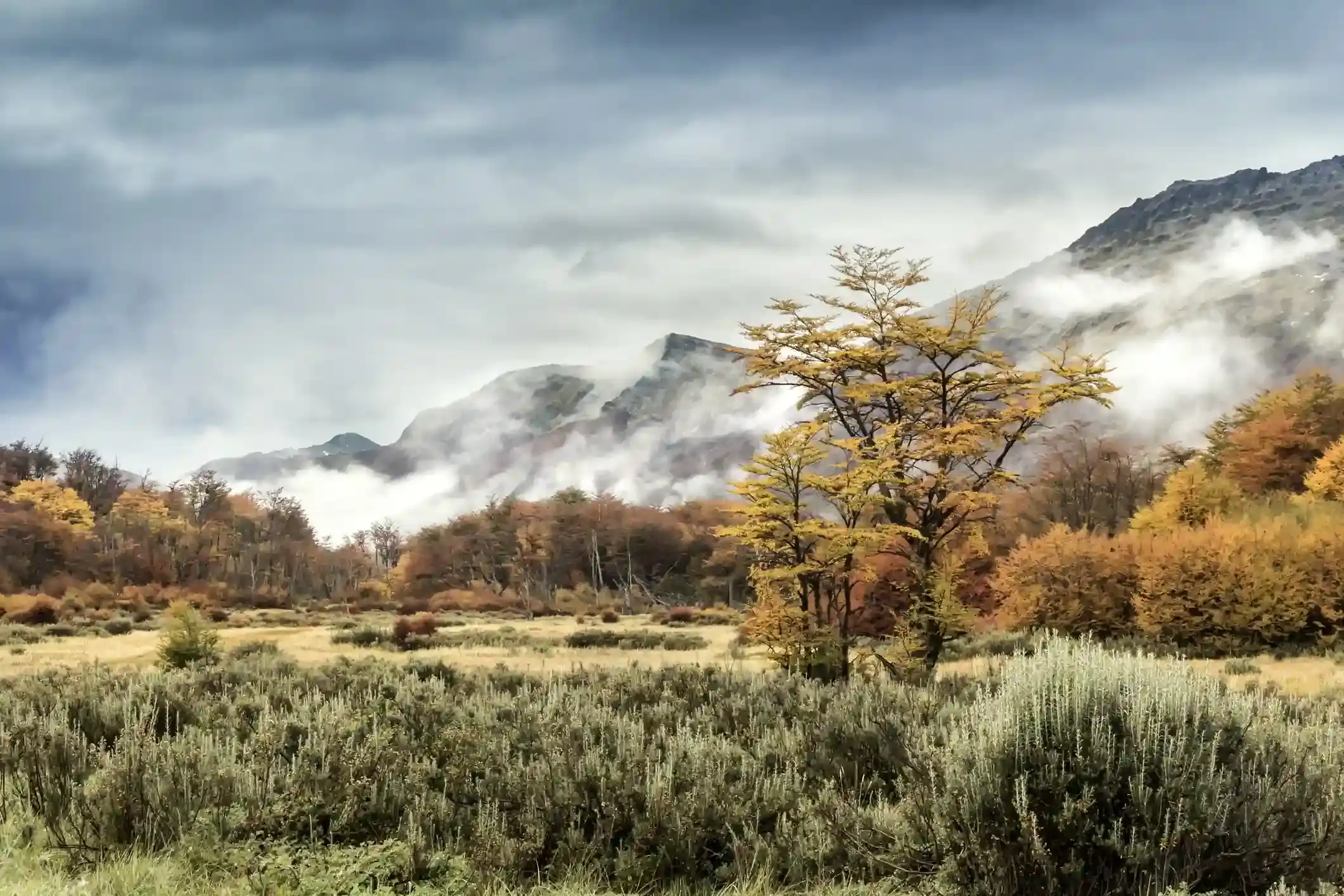
The bonus in March is autumn color. Lenga (the southern beech that covers much of the Patagonian Andes) starts turning yellow, orange, and red from mid-March, with peak color between March 25 and April 10. Villa La Angostura, Huilo-Huilo on the Chilean side, and the valleys around Futaleufú become genuinely striking during this window. Mornings get crisp, the light softens, and the region feels less like a summer destination and more like itself. For riders coming from cold-weather homes (northern US, Canada, northern Europe), the temperature profile is close to September back home.
Shoulder months: October and April
October
October is early and risky. Most mountain passes are clear by mid-month, but not all. Cardenal Samoré can still get spring snow that closes it for 24 to 48 hours. Temperatures in the north run 8 to 15°C (46 to 59°F), with regular overnight frost. The south is colder, often still in the single digits for highs. Around half the hostels, small hotels, and restaurants in the deep Patagonian south stay closed until November, so options on a long route are limited.
The upside is that October is almost empty. If your priority is quiet roads and being alone at famous viewpoints, and you’ll accept the weather risk, October works for a shorter trip focused on the northern lakes region (Bariloche, San Martín de los Andes, Villa La Angostura, Huilo-Huilo). It doesn’t work for a full Ruta 40 south run or a Carretera Austral attempt, the infrastructure isn’t there yet. October is best left to riders who’ve already done Patagonia once and now want to see it empty.
April
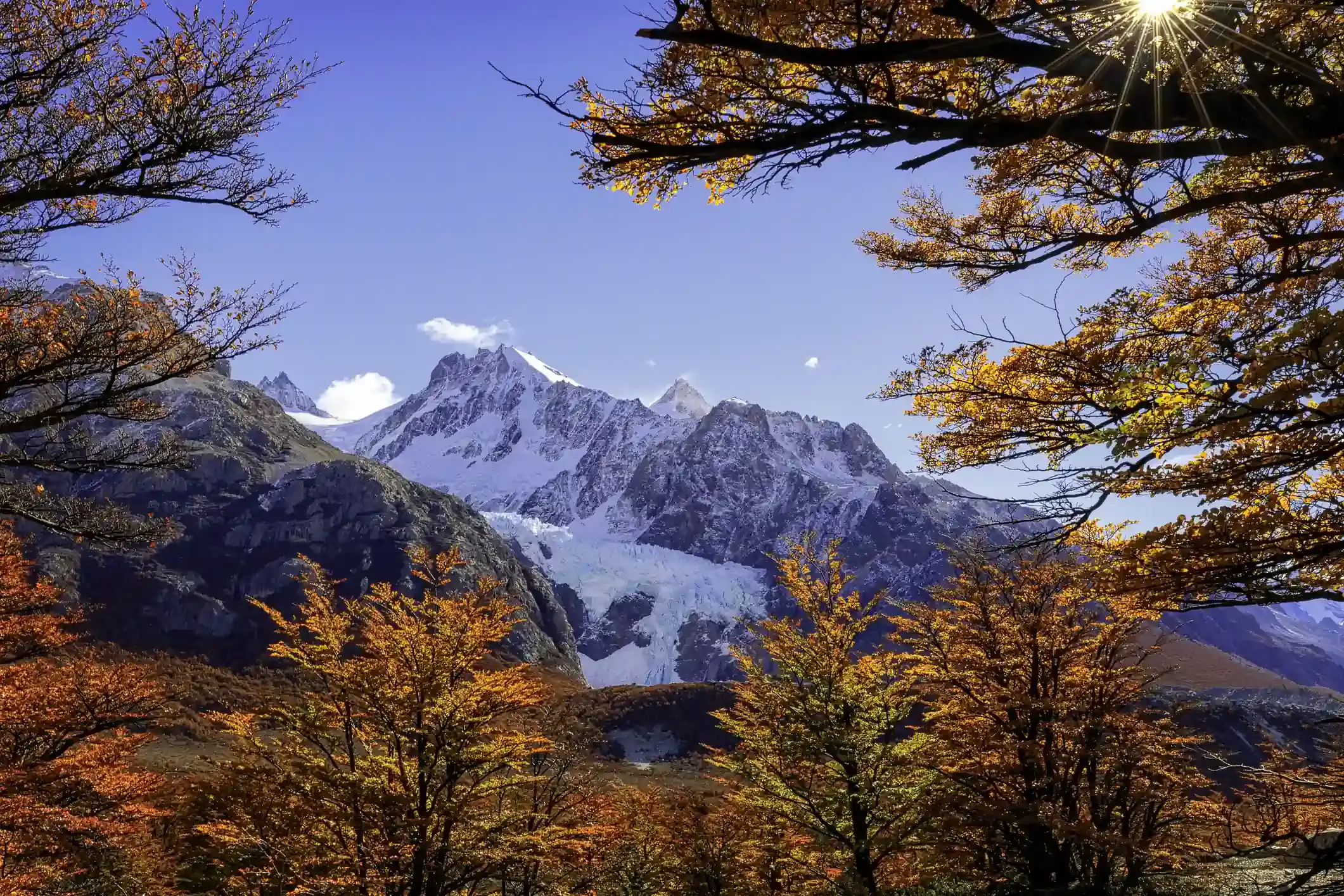
April is the mirror of October, but more usable. The first two weeks of April are often the best pure-riding window of the year: crisp temperatures, calmer wind, quieter roads, and peak autumn color. Highs in the north run 12 to 18°C (54 to 64°F), in the south 8 to 14°C (46 to 57°F), and nights get cold fast. Daylight drops to about 11 to 12 hours by mid-April, so route planning needs more discipline than in summer.
The second half of April is when things start closing. The first serious snow dumps at high passes usually hit between April 15 and April 30. Cardenal Samoré can close for a day at a time. Smaller Chilean-side passes get cut off. Seasonal hostels and restaurants shutter from mid-April onward. Carretera Austral ferries drop to off-season frequency, and you’ll sometimes wait a full day for a ferry that runs multiple times daily in January.
One thing to know about April: Semana Santa, the Argentine Easter week, is a domestic travel peak. Dates shift each year (sometimes late March, sometimes mid-April), but whenever it falls, lodging in Bariloche, El Bolsón, and Villa La Angostura fills with Argentine road-trippers. Check Semana Santa dates for your year and slot your time either inside it (booking ahead) or around it. Avoid big-distance days on the two main holiday driving days, you’ll share the road with a lot of non-expert drivers on a tight schedule.
The off-season: May through September
What's closed and why
From May through September, most of what makes Patagonia rideable is gone. Mountain passes close for snow, sometimes for days, sometimes for weeks. Cardenal Samoré, between Bariloche and Osorno, is the most reliable crossing. It clears quickly but still sees intermittent closures through August. Smaller passes further south stay shut for months. The Carretera Austral north of Coyhaique is technically open year-round but often reduced to one-lane ice and mud, with ferries on skeleton schedules. South of Coyhaique, large sections become impassable.
Lodging follows the same pattern. Bariloche stays busy thanks to the ski resort at Cerro Catedral, so you’ll find hotels and food. Outside of Bariloche, San Martín de los Andes (with Chapelco), and Ushuaia (Cerro Castor), it’s a different world. Small towns along Ruta 40 mostly close their hotels and restaurants. El Chaltén runs at a fraction of summer staffing. Torres del Paine is open but with reduced facilities. Fuel stations on long stretches cut hours or close one day a week. Riding isn’t impossible. The margin for error simply shrinks to nothing.
When off-season makes sense
There’s a narrow case for an off-season trip, and it’s worth naming. If you’re an experienced winter rider with the right gear, you’re not trying to ride all of Patagonia, and you’re willing to base yourself in a functional town and take short day rides, the winter months can work. The area around Bariloche has enough cleared road to ride on most winter days. Ski towns along Ruta 40 north of Bariloche stay plowed. The daily weather window is small, typically 10 am to 3 pm, and conditions flip without warning.
That isn’t what most international riders want from a Patagonia trip. If you’ve flown from Toronto, London, or Melbourne and have two weeks, you want reliable days riding through the big landscapes, not a parked bike waiting for a storm to pass. Save off-season rides for locals and for riders who know the area from summer trips. For everyone else, plan inside the late-October through mid-April window.
Conclusion
Month-by-month cheat sheet
The short version: November and early December are warm, open, and still reasonably quiet. Late December through February gives you the warmest and longest days, but also the windiest, most crowded, and most demanding on booking. March is the calmest, most comfortable, and easiest-to-book month for most riders, with bonus autumn color from mid-month onward. October and April are narrower shoulder windows that reward experienced riders who accept weather risk in exchange for empty roads. May through September is not a serious option for a full Patagonia trip.
If your priority is reliable weather and you can plan far ahead and accept crowds and wind, book January or February. If your priority is the best riding conditions and you don’t need peak-summer temperatures, book March. If you want warm weather without the peak chaos, book late November or the first two weeks of December. If you want fall color and empty roads and can handle cold mornings, book the first two weeks of December. If you want fall color and empty roads and can handle cold mornings, book the first half of April.
One more useful rule: the further south you go, the tighter your window. A trip focused on Bariloche and the northern Lakes District has workable dates from October through April. A trip aiming for El Chaltén, El Calafate, and Torres del Paine has a practical window from late November through late March. A trip that ends in Ushuaia should be tighter still, mid-December through mid-March.
Final thoughts
Patagonia doesn’t reward people who show up without doing the reading. The weather window is real, the wind is real, the booking pressure is real, and the off-season closures are real. The best time to ride Patagonia isn’t one month, it’s the month that lines up with your priorities. The differences between January and March, or November and April, are big enough that you should pick based on what kind of trip you actually want.
If you’re still deciding, take a look at our [Lakes District tour] for the shoulder-month sweet spot, browse our [guided Patagonia tours] for the full range of dates, or [get in touch] to plan a custom trip around your window. We usually reply within a day.