What this stretch is
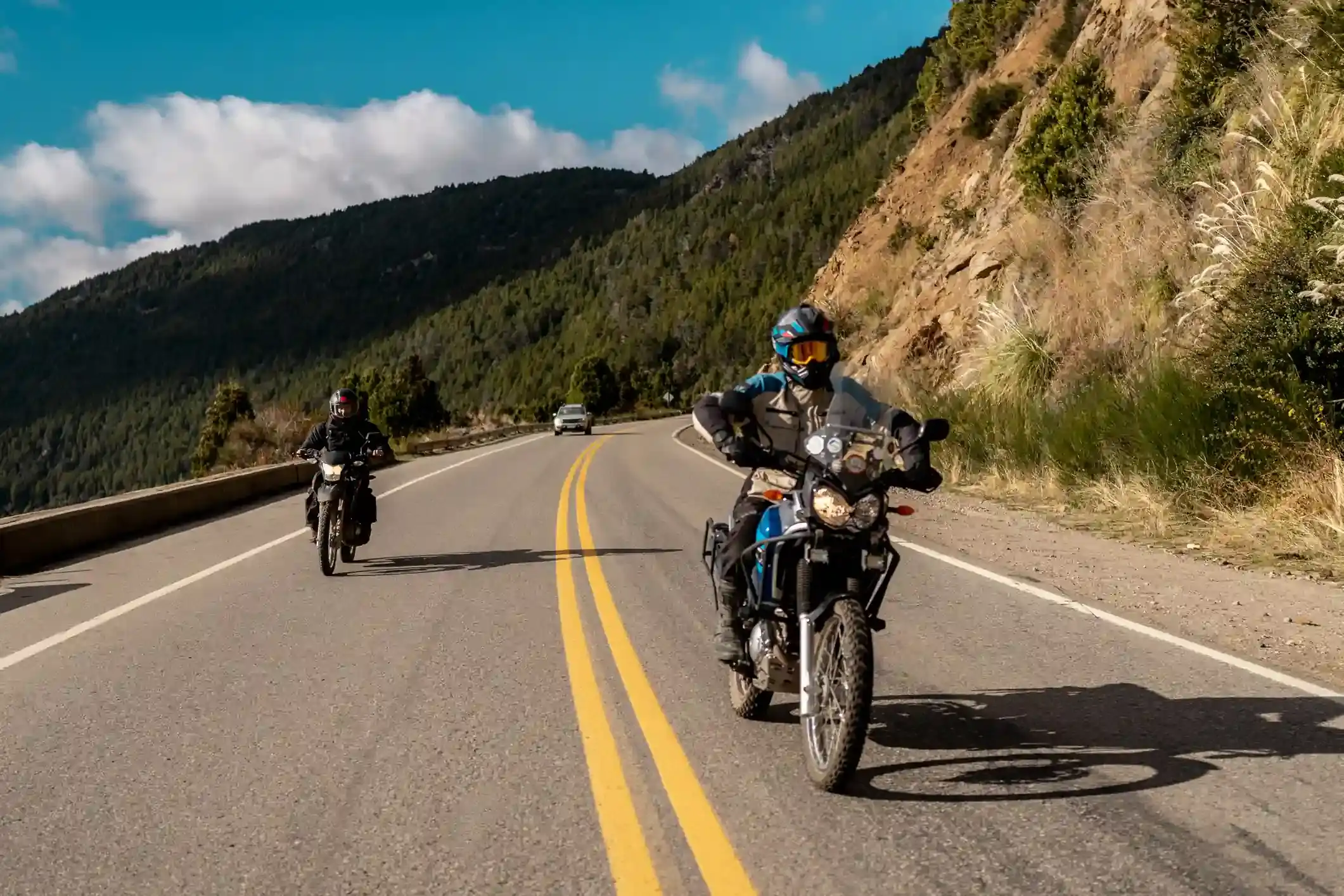
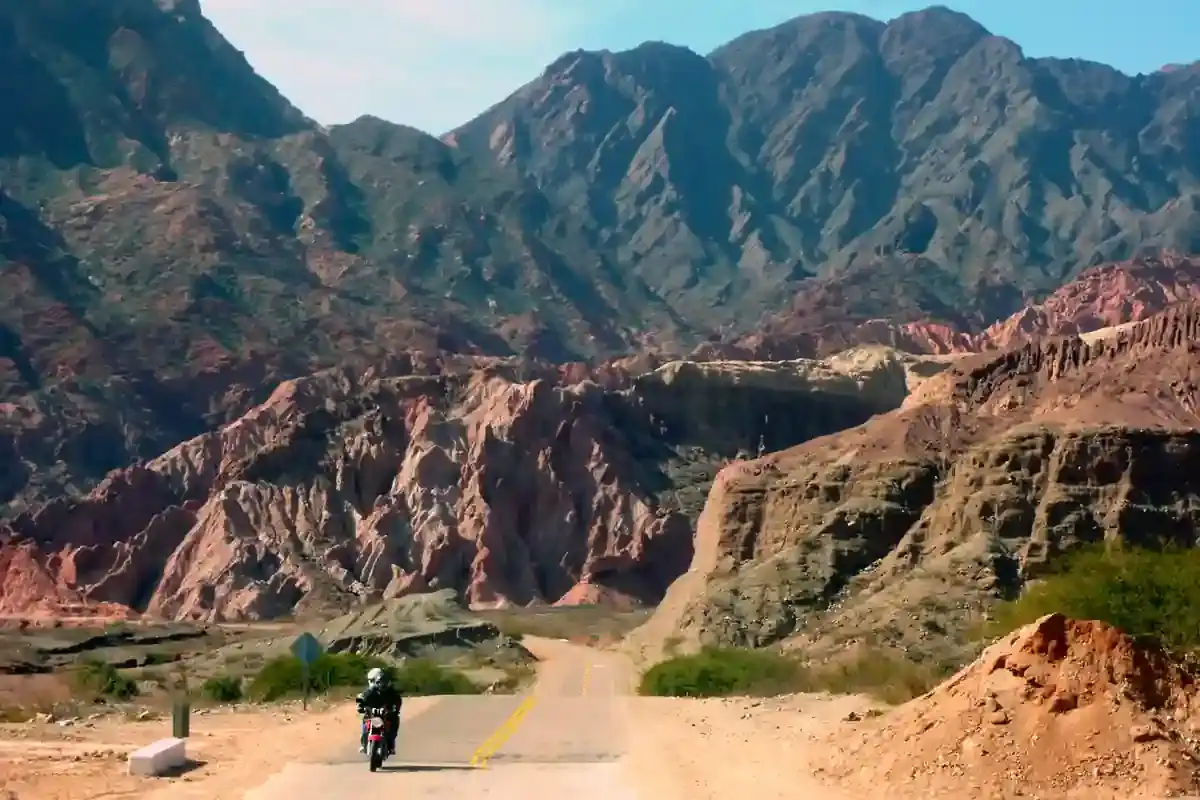
Ruta 68 from Cafayate to Salta is the showpiece paved road of the Northwest. For its first 80 km it follows the Río de las Conchas down a canyon of red sandstone carved into shapes that have all been named: Los Castillos, El Obelisco, El Anfiteatro, La Garganta del Diablo, Los Médanos, Las Tres Cruces. Then the valley opens, the road passes the ghost railway station at Alemania and the Cabra Corral reservoir, and the last 60 km cross the farmland of the Lerma valley through La Viña, El Carril and Cerrillos into Salta.
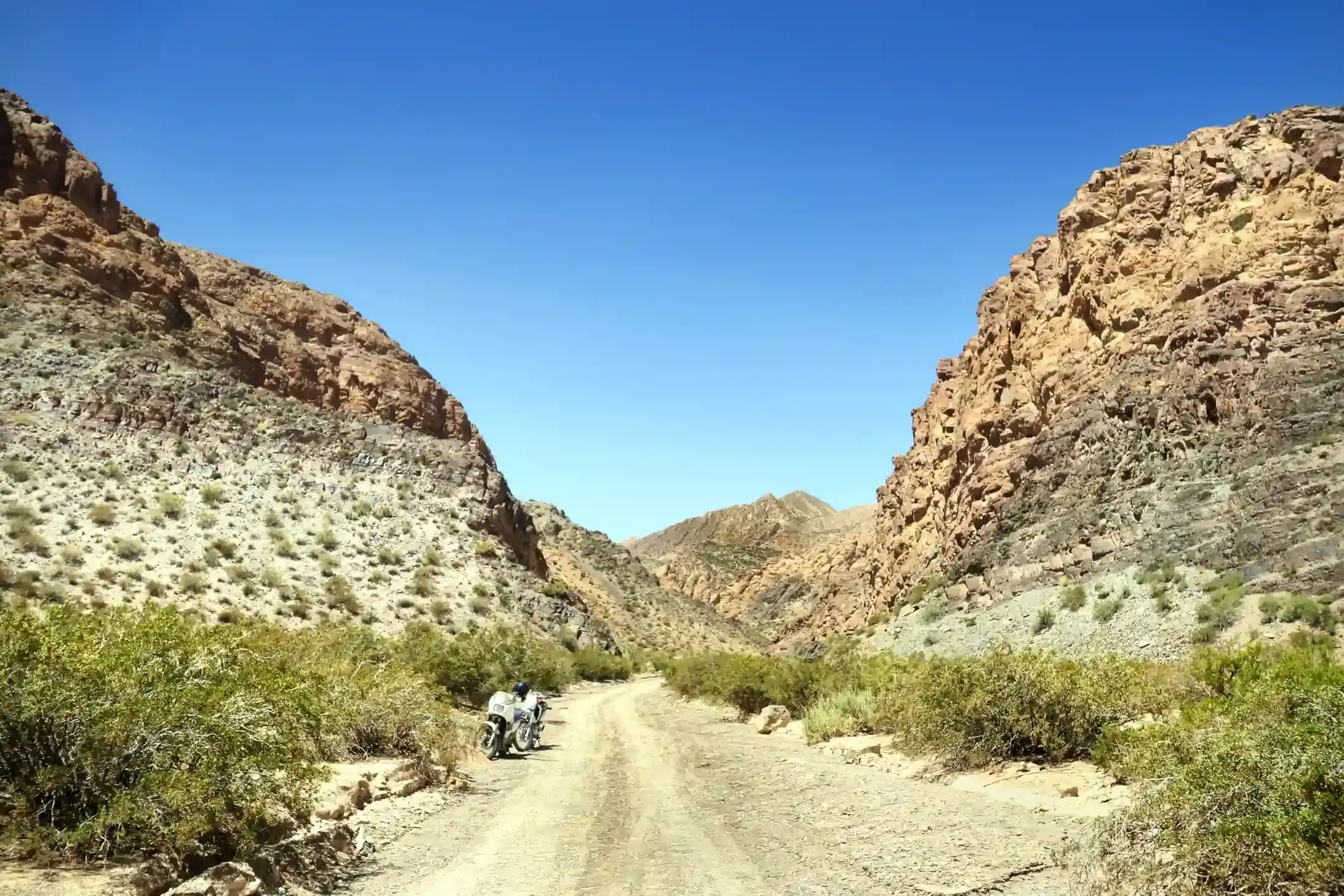
It is 189 km, all of it pavement: OpenStreetMap tags 171 km as paved and the rest as untagged asphalt, with 3 km of gravel on the side roads to the viewpoints. The road is smooth and fast, which on this segment is a hazard in itself: the canyon has blind curves with tour buses stopped in them, and the Lerma valley has trucks, farm vehicles and the heaviest traffic of the loop on the approach to Salta.
Fuel: 102 km from Cafayate to La Viña
Twenty-nine stations, but twenty-six of them are in Cafayate at the start and in the suburbs of Salta at the end. The one that matters in between is the pump at La Viña at kilometre 104, which makes the longest gap 102 km from Cafayate, through the whole canyon with no fuel. Any bike covers it; the point is to leave Cafayate full rather than discover at the Garganta del Diablo that you did not. From La Viña there is fuel in El Carril, Cerrillos and every few kilometres into the city. The fuel range calculator marks the segment as comfortable for every preset.
The weather
This is the hottest segment in the atlas: January highs average 28 °C at the midpoint, with 20 rainy days a month in summer storms; July highs are still 20 °C with almost no rain. The canyon is an oven after noon in summer, and the storms arrive in the afternoon, so the canyon is a morning ride. Wind is negligible except in October, with two or three gusty days.
The riding window on the temperature numbers runs all year; it is the one segment of the loop that is rideable in any month, and the Lerma valley is pleasant even in July.
Stops and detours worth the time
Los Castillos and the Anfiteatro. The two most-visited formations, 50 and 45 km from Cafayate, with parking and walks into the rock. The Anfiteatro is a natural amphitheatre where musicians play for the acoustics; the Garganta del Diablo next to it is a narrow slot in the wall.
Alemania. The abandoned railway station from the 1920s at the mouth of the canyon, now a craft market and a photo stop.
Cabra Corral. The reservoir on the Río Juramento, with rafting on the river below the dam. Our itinerary stops here for the rafting, which is the only time on the loop that anyone gets wet on purpose.
La Viña and Coronel Moldes. The farm towns of the lower valley, and the tobacco fields that make the Lerma valley the tobacco capital of Argentina.
Where to sleep
Cafayate at the start, with its wine hotels. Salta at the end, where the loop began. There is nothing worth a night between them except the lakeside cabins at Cabra Corral.
Riding it with us
The Quebrada de las Conchas is the penultimate day of our Andean Highlands loop, with the rafting at the Juramento river on the way. Read the top hidden routes for the gravel alternatives around this valley, and the planning guide for how the Northwest fits into a longer trip.